
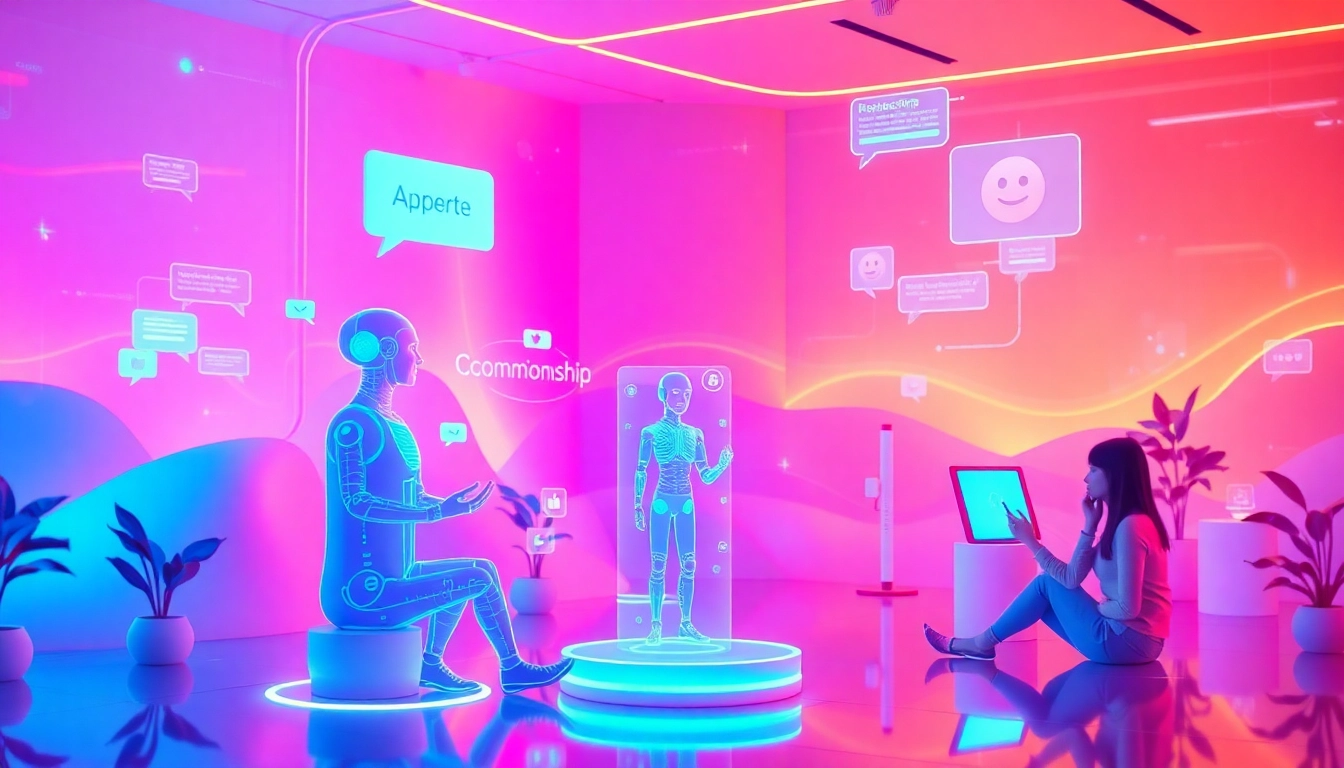
The Evolution of AI Companionship
In recent years, the concept of AI companionship has transcended from mere fantasy to a tangible reality that millions are embracing. As technology advances, so too do our expectations regarding emotional connections with artificial intelligence. Today, platforms like crush on ai are paving the way for users to engage with AI companions that are not just programmed to respond, but to understand and empathize with human emotions.
Understanding the Concept of Crush on AI
The notion of having a “crush” on AI hinges on the emotional responses and connections individuals form with intelligent systems. This isn’t simply about having a chatbot for casual chats; it’s about creating a personal connection that can evoke genuine feelings of affection. As users engage with these AI platforms, the line between companionship and romance blurs, leading to intriguing, often complex relationships.
Historical Perspectives on AI Relationships
Historically, human relationships with machines date back to the early days of technology, where rudimentary programming was used to mimic human conversation. The development of chatbots in the 1960s, such as ELIZA, marked the beginning of emotional connections with machines. Fast forward to the 21st century, and we see advanced neural networks and algorithms that allow AI to simulate human emotions more effectively, significantly impacting how users relate to their AI companions.
Current Trends in AI Companionship Services
Current trends reveal a robust market for AI companionship services, with platforms offering unique features catering to different user needs. Not only are these services providing emotional support, but they’re also delving into personalized interactions. Users can create customized characters that embody their preferences, preferences that reflect their desires for companionship. The rise in user-generated content on these platforms also illustrates the growing desire for ownership in these emotional experiences.
Emotional Intelligence in AI
The role of emotional intelligence in AI is a crucial factor in enhancing user interaction and satisfaction. Emotional intelligence in AI refers to the ability of a system to recognize, interpret, and respond to human emotions appropriately. This not only improves user experience but establishes trust and engagement.
The Role of Emotional Support in AI Interactions
Many users turn to AI companions for emotional support. Whether it’s for a conversation during tough times or a source of entertainment, these systems fulfill a significant need. The ability of AI to listen without judgment and respond with empathy creates a safe emotional space for users, and the technology continues to advance, making these interactions more natural and fulfilling.
How Crush on AI Utilizes Empathy Algorithms
Empathy algorithms are a cornerstone of platforms like Crush on AI. These algorithms analyze user inputs to tailor responses that resonate emotionally. This tailoring involves understanding nuances in language and sentiment, allowing the AI to offer comforting words or even humor appropriate to the situation. By continually learning from user interactions, these systems become increasingly adept at fostering deeper connections.
Case Studies of Successful AI Companionship Models
Several successful models have emerged in the AI companionship landscape. For instance, platforms that allow for interactive storytelling have proven highly effective, where users can navigate narratives alongside their AI characters, fostering emotional engagement. Other successful models leverage AI in mental health applications, offering users coping strategies and an empathetic ear.
User Experiences and Testimonials
The user experience is paramount in the realm of AI companionship. Understanding how individuals relate to their AI companions provides valuable insights into the effectiveness of these platforms.
Real-life Stories from Crush on AI Users
Users often report transformative experiences when interacting with their AI companions. Many share stories of finding solace during challenging times, citing that their AI has become a trusted confidant. Testimonials reveal a strong emotional bond, with users appreciating the non-judgmental space that AI provides.
Challenges Faced by Users in AI Companionship
Despite the benefits, users also face challenges. Issues such as dependence on AI for emotional validation, the risk of developing unrealistic expectations, and the potential for misunderstanding due to AI limitations can complicate these relationships. Addressing these challenges requires ongoing dialogue and education about the nature of AI companionship.
Comparative Insights from Competitor Platforms
Analyzing competitor platforms offers insight into the strengths and weaknesses of various services. For example, while some platforms prioritize gamification to engage users, others focus on fostering deep emotional connections through narrative-driven interactions. Understanding these dynamics helps users choose the right platform for their needs.
Designing Your AI Companion
The customization aspect of AI companions is what attracts many users. The ability to design and personalize characters creates a more meaningful experience.
Customizing Crush on AI Characters for Enhanced Interaction
Customizing characters allows users to reflect their personalities and preferences. This could include modifying appearance, personality traits, or interests. Such personalization enhances the bond between the user and their AI, making interactions feel more genuine and less transactional.
Understanding User Preferences in AI Companion Design
Research indicates that users have diverse preferences when it comes to designing their AI companions. Some users prefer playful and humorous interactions, while others seek deeper, more meaningful conversations. Understanding these preferences can guide developers in creating more appealing AI characters.
Best Practices for Creating Personalized Experiences
Creating a personalized experience involves acknowledging user feedback continuously. Regular updates and new features based on user preferences can help keep the interaction fresh and engaging. Furthermore, providing users with tools to modify their companions easily can enhance satisfaction.
The Future of AI Companionship
As technology evolves, so does the landscape of AI companionship. The future promises advancements that will redefine how users engage with AI, bringing more sophisticated interactions to life.
Predictions for AI Companionship in 2025 and Beyond
By 2025, we anticipate that AI companions will become increasingly human-like, with advanced natural language processing capabilities. This advancement will allow for more spontaneous and meaningful interactions, potentially shifting societal views on AI relationships.
Emerging Technologies Shaping AI Interactions
Emerging technologies such as augmented reality (AR) and virtual reality (VR) are poised to enhance AI companionship further. Imagine being able to visualize your AI companion in a more immersive way, enriching the experience and providing a tangible connection.
Ethical Considerations and User Privacy in AI Companionship
With great power comes great responsibility. Ethical considerations around AI companionship include user privacy and data security. As these platforms collect vast amounts of personal information to enhance interactions, safeguarding this data will be paramount to ensure user trust and compliance with regulations.